Can you believe it’s been over 25 years since The Sims launched? That’s right; we’ve enjoyed over a quarter of a century’s worth of gaming experiences that all look to answer the simple question: what happens when you simulate everything?
Fast forward to here in 2026, and that core tenet is still very much underpinning the game. We’ve noticed, though, that The Sims 4 is starting to feel less and less like a life sim, and it’s not even behaving like just a live service game anymore; it’s evolving into a full-on platform.
Have you felt it too? What’s changed? And why does Sims 4—more than any previous entry in the franchise—feel like it’s absorbing everything around it in the wider gaming industry?
Let’s take a look!
From Expansion Packs to Ecosystems
We know that every new Sims game has iterated on the last. When Sims 2 launched, it was all about harnessing improvements in gaming hardware to deliver deeper levels of simulation and generational play. Open-world design and player freedom, meanwhile, were the key USPs of The Sims 3.
The Sims 4, though, has taken a very different route.
Instead of chasing just scale alone, this edition has really leaned into systems and progressions. Expansions, game packs, and kits are all present and correct, but what’s changed is how they interact.
Now, we’re seeing systems overlapping to the point where brand-new systems are emerging, while gamers are positioned not just as passive players, but as active stakeholders. It’s less about adding content and more about building a true ecosystem that keeps evolving.
It’s also a shift that very much mirrors something happening across the entire gaming industry.
SimOCoin and the Arrival of Digital Economies
Perhaps there’s nowhere that shift is clearer than in how Sims 4 has embraced in-game economies. The introduction of the game’s first cryptocurrency, SimOCoin, in 2025 marked a crucial change—in terms of both what’s possible within the game and how you, the player, are positioned.
Until the emergence of the in-game currency, Businesses and Hobbies was primarily focused on thriving as a business owner to generate Renown. Since last spring, however, investing in SimOCoin has become an official perk, involving players in systems that echo real-world financial mechanics.
We’ve seen the gaming industry as a whole take an interest in digital economies—not just in the rise of GameFi, but also in how existing sectors have integrated decentralized currencies into entrenched systems. Online casino gaming, for instance (itself a sector that shouldn’t be unfamiliar to Sims fans given how popular gambling mods are), has wholeheartedly embraced both blockchain technology and cryptocurrencies.
Savvy platforms, such as slots.lv, have become crypto-enabled environments that prioritize accessibility, transparency, and speed across traditional gameplay formats. By supporting crypto transactions—i.e. enabling players to make deposits and withdrawals in popular tokens like BTC and USDT—they remove much of the friction associated with fiat payment systems. Users, meanwhile, get faster and more flexible control over how they engage with those formats. They can access all the usual games using these currencies and enjoy the benefits that cryptos offer.
Now, the Sims isn’t replicating that model directly, since SimOCoin is more of a “fantasy” coin than one with real-world value, but it’s nevertheless riding the growing trend for dynamic and layered virtual economies.
Changing the Role of Players
The gaming community has always been at the core of The Sims, don’t get us wrong, but recent updates to Sims 4 are giving users much more of a role in shaping the identity of the series.
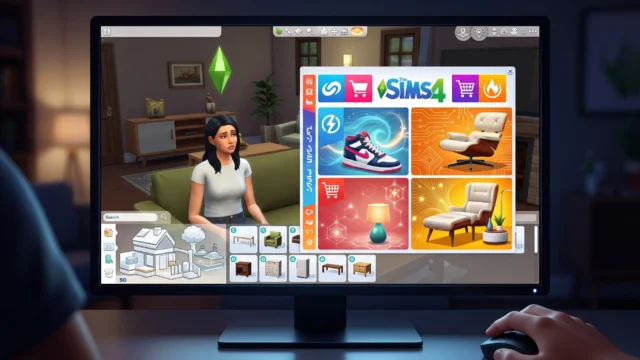
Sure, we’ve always found our own ways to do that, with custom content and mods for every life experience you can think of queuing up in our downloads over the years. Now, though, EA has taken steps to properly formalize that relationship with its recently launched Maker Program and Marketplace.
All of those creators out there operating on the fringes? EA wants to bring them directly into the game itself with this new initiative—seemingly inspired by platforms like Roblox—that will enable them to publish content in the official in-game Marketplace.
It marks a progressive step, certainly, especially as it’s about legitimizing user-generated content. However, while the benefits to creators are clear: official tools, support, guidelines, and the potential to earn from their content, what’s in it for players?
Well, how about access to curated updates that are perfectly integrated and accessible in-game? No more having to trawl through external sites and hoping everything still works after running a patch!
Why EA Is Building Out, Not Moving On
What’s really fascinating here is that EA is still investing pretty heavily in a game that’s basically been around for over a decade. Why?
Demand is always a factor. The Sims 4 pulls in a huge player base, for starters. But there’s a lot more to this choice to build out rather than go all-in on The Sims 5 (especially when you factor in the latest discourse around Project Rene).
The industry has changed a lot, with modern gaming spaces from MMOs to online casinos switching to digital currencies, and many developers looking to add depth to their existing systems, rather than starting from scratch. EA is joining the tribe building outward, resulting in The Sims 4 staying in place as the platform you return to again and again.